Tips for Excavating on a Slope Without Causing Erosion
Excavating on sloped land requires more than just leveling ground. Without proper planning, digging into a hill can trigger erosion, drainage issues, or even slope failure. Whether you’re building a driveway, home pad, or terraced yard in Montanas hilly terrain, here are key tips to excavate safely and responsibly on a slope.
Start with a Site Assessment
Understand the slopes characteristics before moving any soil. Key things to evaluate include:
- Slope steepness: Anything over 15 percent needs special precautions
- Soil type: Sandy or loose soils erode faster than clay or rocky ground
- Vegetation: Existing plant cover helps prevent runoff and erosion
Plan for Drainage From Day One
Water moves faster down a slope, which increases the risk of erosion. Good drainage planning includes:
- Water bars or diversion ditches: Redirect runoff around the excavation site
- Retaining walls or berms: Stabilize cut areas and protect downhill slopes
- Staging uphill work: Begin from the top and work down when possible
Use the Right Excavation Techniques
Excavating on a slope requires equipment with good stability and operators who know how to grade in layers.
- Step-cut or bench the slope: Create level work platforms to reduce slide risk
- Compact as you go: Reduces settling and strengthens the remaining slope
- Avoid over-digging: Cutting too deep can destabilize the entire slope
Stabilize Disturbed Soil Quickly
Once the slope is cut or filled, bare soil must be stabilized to prevent erosion from wind or rain. Methods include:
- Hydroseeding or straw mulch: Add quick ground cover while plants establish
- Geotextile fabric: Helps anchor soil on steep grades
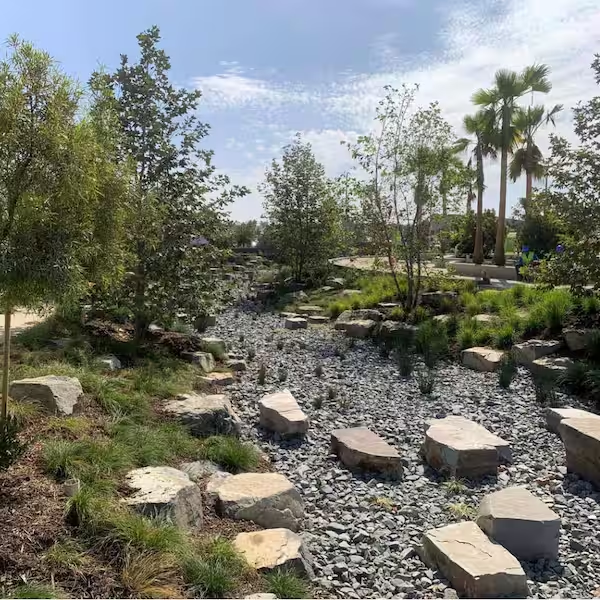
- Gravel or riprap: For slopes exposed to concentrated runoff
Equipment and Safety Tips
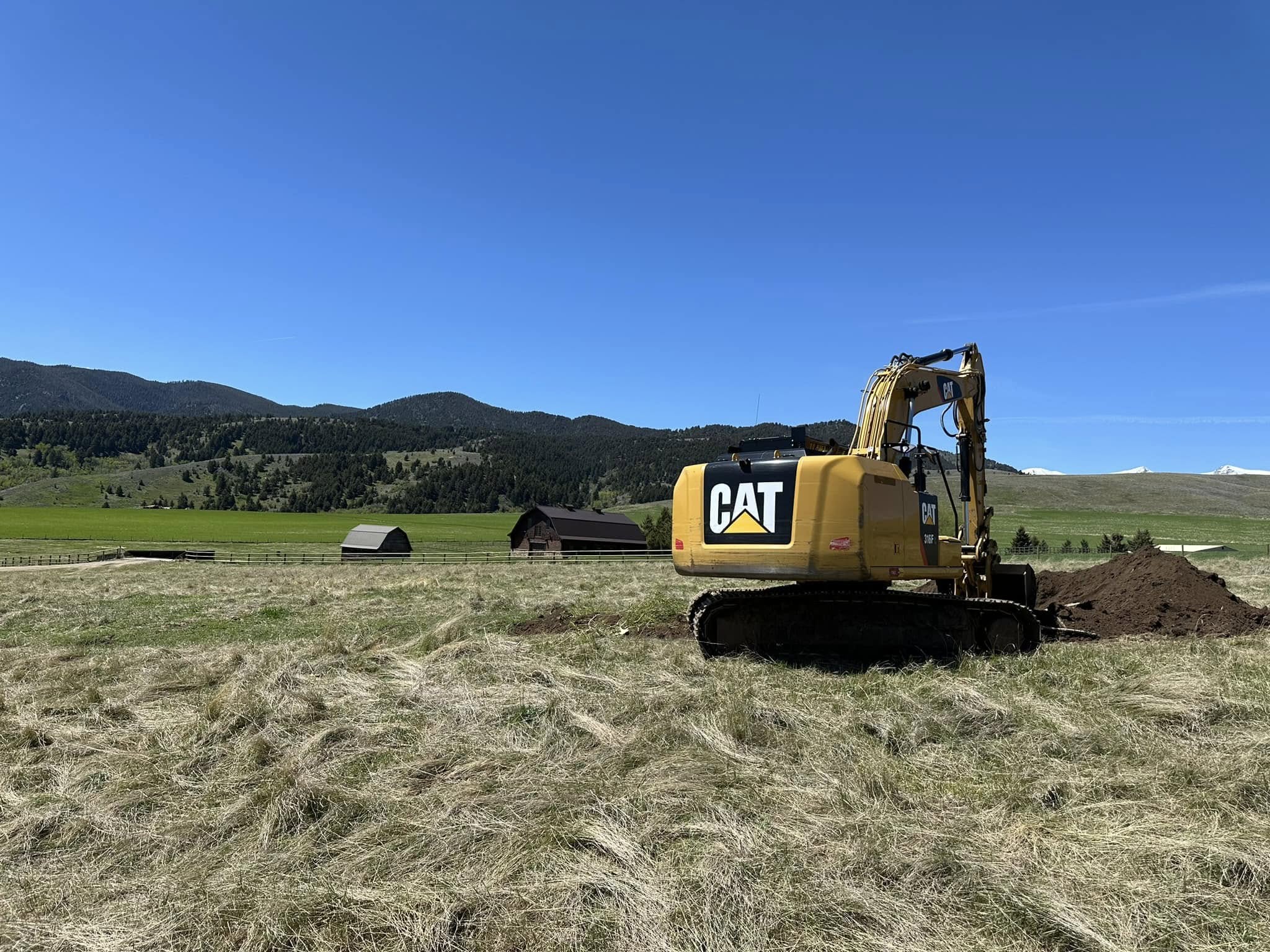
- Use tracked machines for better traction on uneven ground
- Position machines perpendicular to the slope when grading
- Ensure proper communication and visibility if multiple crews are on-site
Montana Terrain Considerations
- The Bitterroot and Rocky Mountain Front ranges have steep sites with loose, rocky soils
- Snowmelt in spring can cause sudden erosion on exposed slopes
- Local permit offices may require erosion control plans for hillside work
Conclusion
Excavating on a slope isn’t just about removing dirt. It’s about managing water, preserving stability, and protecting the surrounding land. With careful technique and good planning, you can safely shape hillside ground for driveways, pads, or terracing while avoiding costly erosion problems later.