Signs Your Property Needs a Culvert and How to Size It
Managing water on rural land is one of the most important parts of protecting driveways, roads, and structures. Culverts help redirect water safely under paths and prevent flooding, erosion, and road damage. If youre not sure whether your property needs one, this guide will walk you through the signs to look for and how to approach proper sizing.
What Is a Culvert?
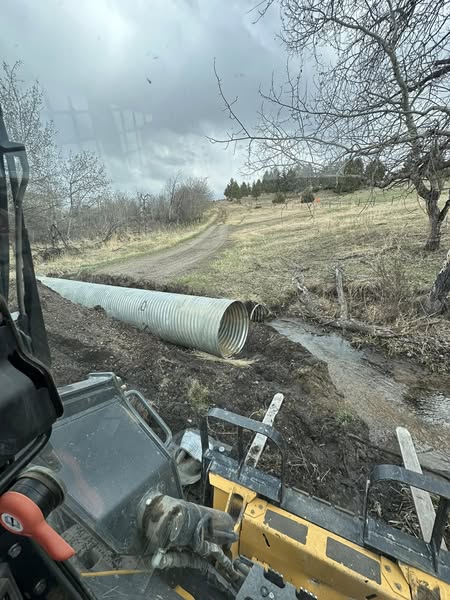
A culvert is a pipe or box structure that allows water to pass underneath a road, driveway, or path. It is typically installed in a ditch or low point where water collects or flows naturally. Proper culvert installation keeps water moving without damaging the surrounding area or infrastructure.
Common Signs You Need a Culvert
- Standing Water After Rain: If water pools on or around your road, driveway, or yard after a rain, that’s a sign drainage is not adequate.
- Water Cutting Across the Road: Flowing water that crosses paths or access roads can lead to deep ruts and washouts. A culvert can redirect that flow underneath instead.
- Erosion Near Roads or Driveways: If water is eating away at the edges of your driveway or road, it needs to be redirected.
- Driveway Crosses a Ditch or Swale: Anytime a road crosses a natural drainage path, a culvert is usually necessary to maintain flow and prevent washout.
- County or Township Requirements: In some areas, culverts are required when you install a new driveway or private road entrance off a public road.
How to Size a Culvert
Culvert sizing depends on several factors, including how much water needs to pass through, how steep the land is, and how quickly the water flows during storms or snowmelt. Here are some general considerations:
- Diameter: A common residential culvert size is 12 to 18 inches. In areas with high flow or runoff, larger sizes (24 inches or more) may be needed.
- Length: The culvert should be long enough to extend past both sides of the driveway or road with room for sloped end treatments.
- Material: Options include corrugated steel, plastic (HDPE), or concrete. Plastic is lightweight and corrosion-resistant. Steel is strong but may rust without proper coating.
- Capacity: For larger parcels or significant stormwater flow, consult with a contractor or engineer to determine capacity based on rainfall and watershed size.
Tips for Proper Installation
- Set the culvert at the natural flow line of the ditch so water enters and exits freely.
- Backfill with compacted gravel or crushed stone, not loose soil, to prevent settling.
- Use flared end sections or rock at both ends to reduce erosion.
- Ensure the culvert has enough slope for water to drain through without clogging.
Conclusion
If your property is showing signs of poor drainage or erosion, a culvert may be the solution. Sizing and installation are important for long-term performance. If you’re unsure, a local excavation contractor can help evaluate your land and recommend the right culvert for your needs.