
How to Plan a Slab Foundation in Rocky Terrain
Building on rocky terrain in Montana presents unique challenges, especially when planning a concrete slab foundation. While rock can provide a solid base, it can also complicate excavation and grading. If you’re planning a shop, barn, or home on land with shallow bedrock or uneven rock outcroppings, here’s how to prepare for a stable, long-lasting slab foundation.
Step 1: Assess the Rock Depth and Layout
Start with a site evaluation. A contractor may use a probe, test pit, or geotechnical report to understand the depth, hardness, and spread of rock under the surface. Key things to determine include:
- How deep is the rock layer?
- Is it consistent, or broken and uneven?
- Does the rock sit at or above your desired foundation level?
Step 2: Decide Whether to Dig or Build Up
If the rock is shallow but uneven, you have two main options:
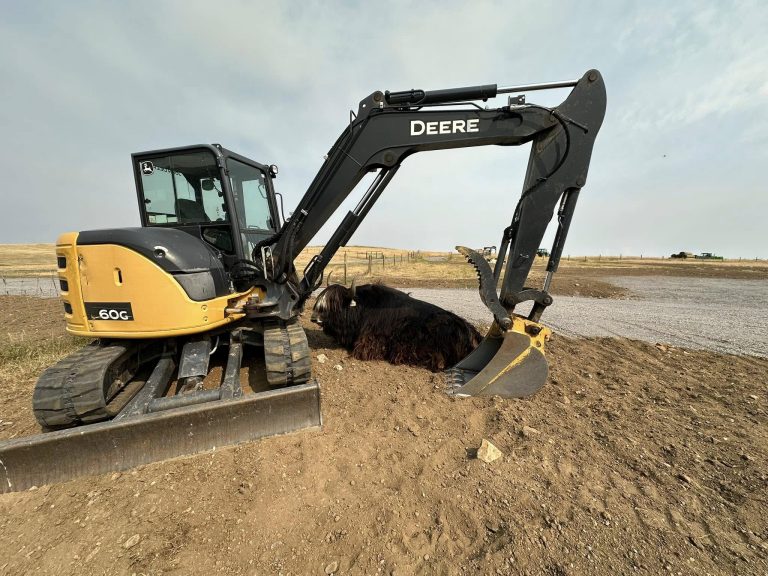
- Excavate the High Spots: Break or chip down the rock using an excavator with a hydraulic breaker or jackhammer attachment
- Build Up the Low Spots: Bring in clean fill or gravel to level the pad above the rock
In many cases, a combination of both approaches works best to reduce cost and labor.
Step 3: Prepare a Stable Subgrade
Even with rock underneath, the slab needs a level, compacted base. Common prep steps include:
- Adding a layer of crushed gravel to smooth over irregular surfaces
- Using a compactor to eliminate air gaps and create a firm surface
- Applying a geotextile fabric if building up over fractured rock
Step 4: Plan for Drainage
Rocky areas often have poor drainage. Grade the pad area so water flows away from the slab. Consider French drains or daylight pipes if water tends to collect at the base of slopes or cliffs nearby.
Step 5: Form and Reinforce the Slab
- Use heavy-duty rebar or wire mesh throughout the slab for strength
- Consider thickening edges or footers where extra support is needed
- Anchor the forms securely since rock doesnt always allow for easy staking
Step 6: Pour and Finish the Concrete
Once the base is level and compact, the concrete can be poured and finished as usual. Be sure to allow for temperature fluctuations if building during Montana’s shoulder seasons. Expansion joints and fiber-reinforced concrete can help reduce cracking over time.
Conclusion
Building a slab foundation on rocky terrain takes more planning, but the rock itself can be an asset. With careful grading, strong reinforcement, and attention to water control, you can build a slab that holds up to both time and Montana’s extreme conditions. Talk to your excavation team early to plan the best approach for your specific site.