How Deep Should You Dig for a Driveway Base?
Whether youre putting in a gravel driveway or prepping for pavement, the depth of your driveway base is one of the most important factors in how long it lasts. Skimping on the base often leads to potholes, ruts, and constant maintenance. Here’s how deep to dig, what materials to use, and what affects your depth decisionespecially in rural Montana.
Typical Driveway Base Depths
- Light Use (cars, pickups): 8 to 12 inches of compacted base material is usually sufficient
- Heavy Use (trailers, equipment): 12 to 18 inches or more is recommended
- Paved Driveways: Often require 6 inches of compacted base plus additional subgrade prep and a top layer of asphalt or concrete
Factors That Affect Depth
- Soil Type: Soft or clay-heavy soils need a deeper base to avoid settling. You may also need a geotextile fabric layer to keep gravel from mixing with the soil below.
- Drainage: Poorly draining sites need more depth and possibly an underdrain to stay dry and stable.
- Traffic Load: The more weight your driveway sees, the deeper and stronger the base should be.
- Frost Depth: In Montana, freeze-thaw cycles are hard on driveways. A deeper base helps reduce heaving and cracking in spring.
Best Materials for Driveway Base
- Crushed Gravel (¾ inch minus): Most common and compacts well. Use in multiple layers and wet it slightly before compacting.
- Pit Run: Larger, rougher material that works well for deep base layers, especially in wet areas
- Geotextile Fabric: Use this under gravel in soft soils to prevent mixing and improve longevity
Excavation Tips
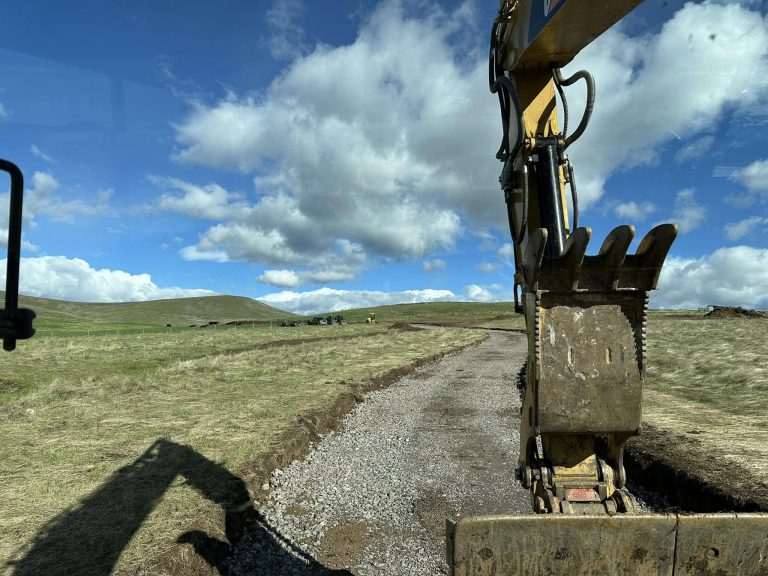
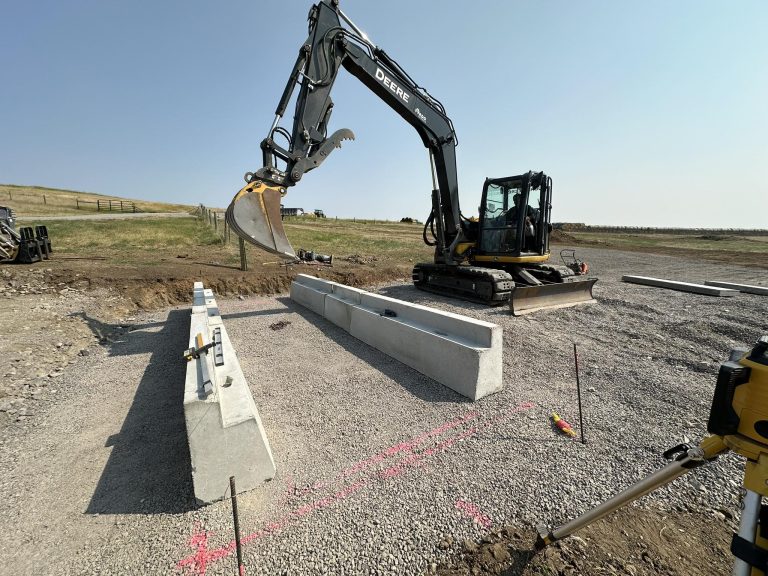
- Use a skid steer or excavator to dig to the proper depth and remove all topsoil
- Make sure the subgrade is compacted before adding gravel
- Excavate with a slight crown or slope so water drains off the sides of the driveway
Montana-Specific Advice
- Expect to dig deeper in wet or shaded areas where ice and mud persist
- In colder regions, consider a thicker base to combat frost heave
- For long driveways, plan for proper drainage ditches or culverts every few hundred feet
Conclusion
A driveway is only as good as whats underneath it. If you want fewer ruts and less maintenance, dig deep enough to build a solid base. In Montanas tough conditions, that often means more than you thinkbut its worth it for a smoother, longer-lasting surface.